Christopher Rivas and the Art of “Getting Free”
Written by: Alexis Alabado
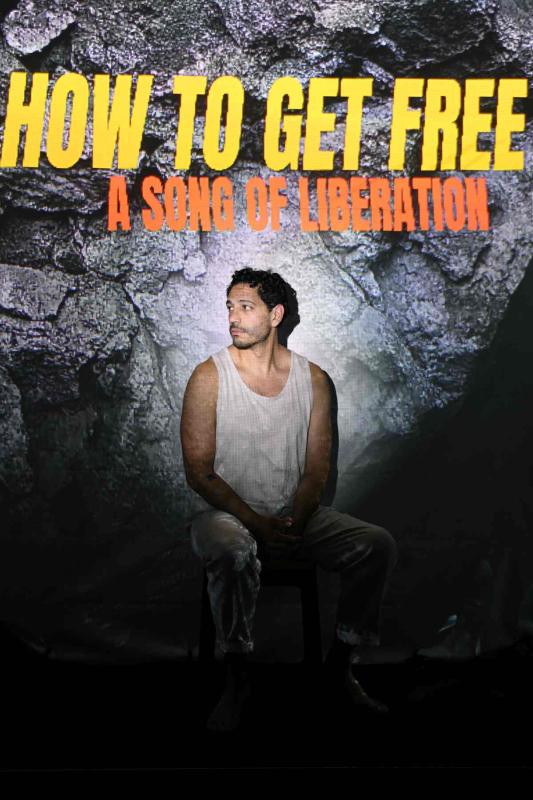
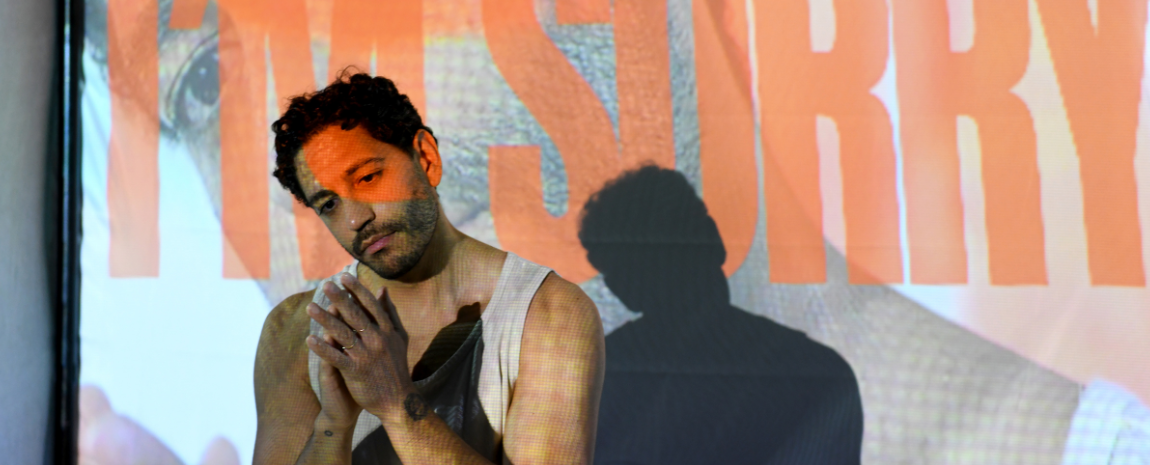
When Christopher Rivas takes the stage this November at ASU Gammage with his new solo performance HOW TO GET FREE, he won’t just be stepping into the spotlight—he’ll be stepping into a new chapter as the theater’s next three-year Artist in Residence. It’s a milestone for the Los Angeles-based writer, performer, and storyteller, but it’s also the natural continuation of a relationship that began years ago.
Rivas first came to ASU in 2022 through his solo theater work THE REAL JAMES BOND… WAS DOMINICAN, a piece rooted in personal history and cultural reclamation. That show, presented at ASU Kerr Cultural Center, sparked conversations with Colleen Jennings-Roggensack, ASU Vice President for Cultural Affairs and Executive Director of ASU Gammage. Eventually, a deeper partnership was established with the commitment to premiere HOW TO GET FREE in ASU Gammage’s 2025–2026 Beyond Season, and Rivas’s first large-scale residency.
“I’ve done some fellowships, but never in this context,” Rivas said. “Three years in one place is unique and beautiful, and a special opportunity in its own way.”
Rivas’s Radical New Work Takes Shape
Though this fall marks the official launch of his residency, Rivas has already begun immersing himself in the ASU community—meeting faculty, exploring departments, and considering collaborations. “It’s a big place,” he said. “There’s a Center for the Study of Race and Democracy, and I’m interested in what it would mean to partner with them. My interest is in liberation and the freedom that we claim to have.”
Liberation is a theme that runs through all of Rivas’ work, whether on stage, in his podcasts (Brown Enough, Rubirosa), or in his writing (Brown Enough). It’s also central to the next project he hopes to develop during his residency: THE PUNCHLINE.
“It’s still a working title, but the premise is I want to theatricalize having a year left to live, and I want all of us to die in 60 minutes and see if we change our lives,” Rivas explained.
It’s a project born from his own spiritual practice in Buddhism and personal grief. “I lost someone close to me at 13 years old, and that made me very afraid of death to the point where I couldn’t sleep and had panic attacks,” Rivas said.
On some days, he is still very afraid of death. But through his own studies, workshops, and volunteer work, Rivas is learning to make the most out of each and every moment; his fascination surrounding death is his way of making friends with it.
This exploration of mortality is part of a broader desire to foster intimacy, honesty, and presence—both in himself and his audiences. “I think that’s our job as artists,” Rivas said. “We meet our addictions, our fears, our joys. And in sharing that, maybe others can do their own work too.”
When discussing his upcoming residency work, Rivas returned to one word: gratitude. “That’s the strongest feeling I have right now, followed by excitement. I know I’m here to offer something, but I also know how much I’ll learn. That’s the magic of collaboration.”
While many artists speak of impact in grand terms, Rivas speaks of intention. “I’m not big on goals,” he admitted. “They can be limiting. My aim is to be more medicinal than harmful. Everyone and their mother wants to move up in this world, but what is it like to reach across the table?”
That mindset extends to how he envisions working with ASU students and the broader community, and being driven by his mission of creating spaces of belonging.
“My work is about identity and story,” Rivas said. “I believe more bodies of culture need to tell their stories—and to know those stories have value. I’m hoping the communities and partnerships I establish while here will feel motivated collaborating with me and take up space in their own way.”
For now, he’s still finding his rhythm within ASU and the community at large, open to where the path may lead. He hopes to connect with departments focused on death and spirituality, with medical or hospice studies, and with anyone interested in story as a tool for healing.
“It makes sense to me that the piece in November is called HOW TO GET FREE, and then after we’re free, we have to learn how to die [in PUNCHLINE]. We have to learn how to be okay with the only destination we’ll ever arrive at.”
Stuck, Starved, and Self-Obsessed: The Stories Behind HOW TO GET FREE.
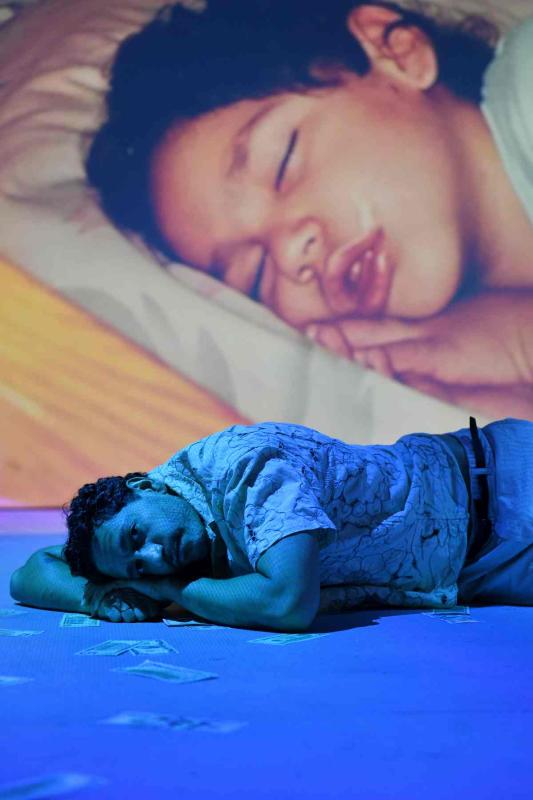
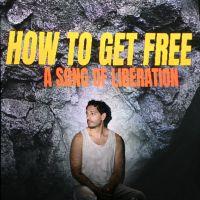
HOW TO GET FREE is structured as a three-part one-man show that will premiere this November at ASU Gammage, each act reframing a Greek myth—Sisyphus, Tantalus, and Narcissus—as a mirror for the modern age.
“These myths are timeless,” Rivas said. “But now they’re our Instagram feeds and our capitalist obsession with ‘more.’ My hope is that audiences leave with some kind of freedom—even if it's small. If you walk out and forgive someone, that’s a win. If you look at your phone less, that’s a win.”
Greek mythology is some of Rivas’s favorite stories to dissect. Sisyphus, Tantalus, and Narcissus are figures from Greek mythology known for their eternal punishments, each representing a different type of human folly. Sisyphus, a cunning king, angered the gods by tricking them and cheating death twice. As punishment, he was condemned to spend eternity rolling a massive boulder up a hill, only for it to roll back down each time he neared the top. Sisyphus becomes a symbol of the exhausting grind and the weight of ambitions—the never-ending cycle of work, hustle, and striving for more.
Tantalus, a mortal who was invited to dinners with the gods on Mount Olympus but never allowed to take home godly food or drink, was punished for his arrogance when he took some back to mankind. He was doomed to stand in a pool of water with fruit trees overhead, but the water and fruit would always recede just before he could reach them, leaving him forever hungry and thirsty.
“I thought to myself this is exactly what whiteness does to bodies of culture,” Rivas said. “It’s exactly what Instagram does to everyone who’s trying to rest–it tells you to do more and make more. It shows you the dessert and the wine, but it doesn’t let you taste it.”
The final act revolves around Narcissus, a beautiful youth who was cursed by Nemea, goddess of revenge, after he rejected her love and the love of others. He fell in love with his own reflection and, unable to detach himself from his own image, he starved and eventually died. Narcissus echoes the algorithm-fed self-obsession of modern life, where validation and identity are increasingly tied to how we’re seen online.
To Rivas, we are the ones pushing the boulder of ambition uphill, forever scrolling with hunger we can’t satisfy, and staring at reflections fed back to us by algorithms we helped create.
The piece premiered as a workshop last June, and the response was immediate. “Two donors saw Act 3 and said, ‘We’ll give whatever’s needed to bring this to life.’ It’s that kind of piece,” Rivas shared. “It’s hard to describe without giving too much away. But it’s not like anything I’ve seen before.”
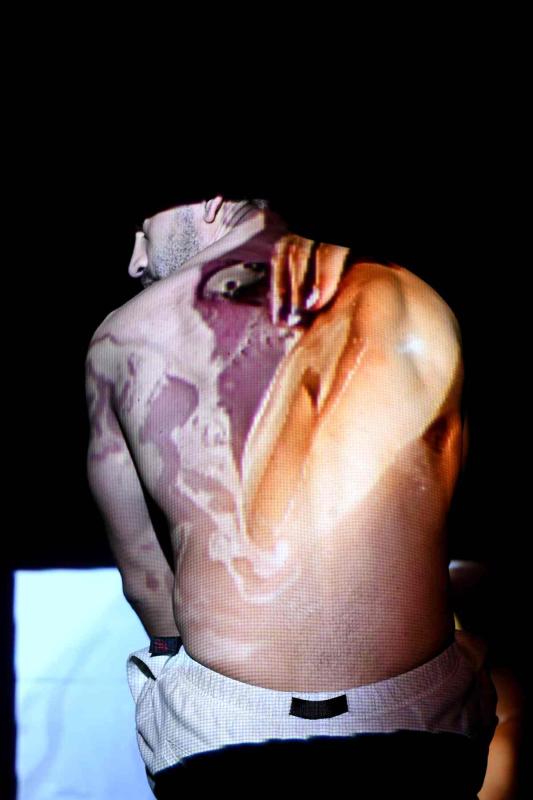
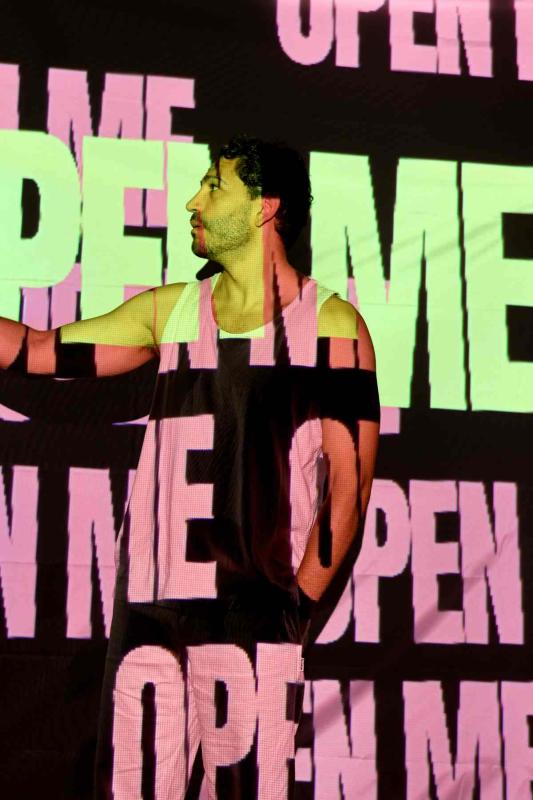
Told with immersive music and stage design, HOW TO GET FREE takes you on a journey through Rivas’s personal life with the hope that audiences can see pieces of themselves reflected in his storytelling.
“We explore through these Greek myths that there are many different forms of freedom, but each of them contributes to the whole,” Rivas said.
With HOW TO GET FREE just months away and THE PUNCHLINE beginning to take shape, Rivas stands at the edge of something expansive—part performance, part revelation. Whether he’s invoking ancient myths or imagining our final days, one thing is clear: This residency is more than a performance opportunity. It’s a space to breathe, to question, and ultimately, to get free.
Image Gallery