Celebrating the Journey of Young Performers
By Megan Loponen

Ask anyone at ASU Gammage what the loudest, most fun and sentimental night of the year is, and they’ll all tell you the same answer: the ASU Gammage High School Musical Theatre Awards (HSMTA). One night every spring, 25 high schools from across Arizona come together for an incredible evening of celebration. Each school performs on the iconic ASU Gammage stage, in celebration and recognition of the performers and technicians who went above and beyond in their craft. The night is capped off with the announcement of the Best Male and Best Female Leads, two talented students who go on to represent ASU Gammage in New York at the prestigious Jimmy Awards, presented by the Broadway League. It’s an emotional and wonderful night for students, but often the question most asked is: who decides who wins? That’s where our behind-the-scenes superheroes come in, the judges and their adjudication process that make it all possible.
The HSMTA judges are a group of 12-15 Arizona based theatre professionals dedicated to the growth and development of the students involved in high school theater. Their backgrounds include actors and technicians, teachers and community artists, and all of them are currently active in the industry. Some are new this year; others have been with the 11-year- program from the beginning. This is my 8th year being an adjudicator - all of us go through a thorough application process and trained every year to ensure their scores and feedback are accurate, objective, and consistent.
The judging season begins in October with the launch of fall productions. Three judges are assigned to each school and are responsible for not only giving a fair and accurate score, but for providing detailed and constructive feedback for each award nominee, sometimes up to 18 per ballot. This process then continues until the last of the spring performances in April, with each judge seeing and adjudicating between 6-10 performances a year.
Much more goes into consideration when scoring than just what happens on stage, there’s also the budget of the school, the scheduling or administrative constraints students had to work around, the style and difficulty level of the show itself, and so many more niche factors. Most of this information is provided to the judges in a brief submitted by the high school directors and is integral for keeping scoring fair and as objective as possible.
Most people believe that when the last school gives their last bow, the judging stops. But in fact, the second round has just begun. Scores are tallied and averaged, and nominees and finalists with ties are given additional adjudication via director submitted clips and stills from the show, this this time presented to the wider pool of judges. Finalists for Lead Male, Lead Female, and Vocalist are then asked to come to ASU Gammage for a solo audition and interview with a panel of five judges. After all the finalists have performed and answered the panel’s questions, the nitty-gritty discussions begin.
Since the Lead Male and Female winners move on to the Jimmy Awards, additional factors come into consideration when choosing a winner: How did they conduct themselves during the interview? How was their performance different on a stage versus in a private audition space? Do they have something that makes them stand out amongst a group of equally talented peers? These nuanced points spark debate amongst the judges, with the panel members often waving headshots or feedback cards to make a point. But the spirited debate is underlined with joy and pride, because at the end of the day the judges get to argue the best aspects of each students audition and advocate for their strengths.
Finally, after two days of auditions and hours of going back and forth between finalists, the winners are selected.
And then – the loud and exciting capstone of it all, the night of the awards showcase.
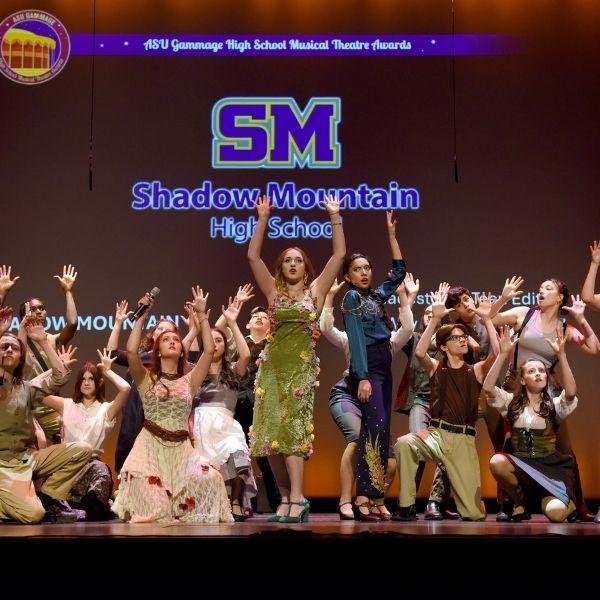
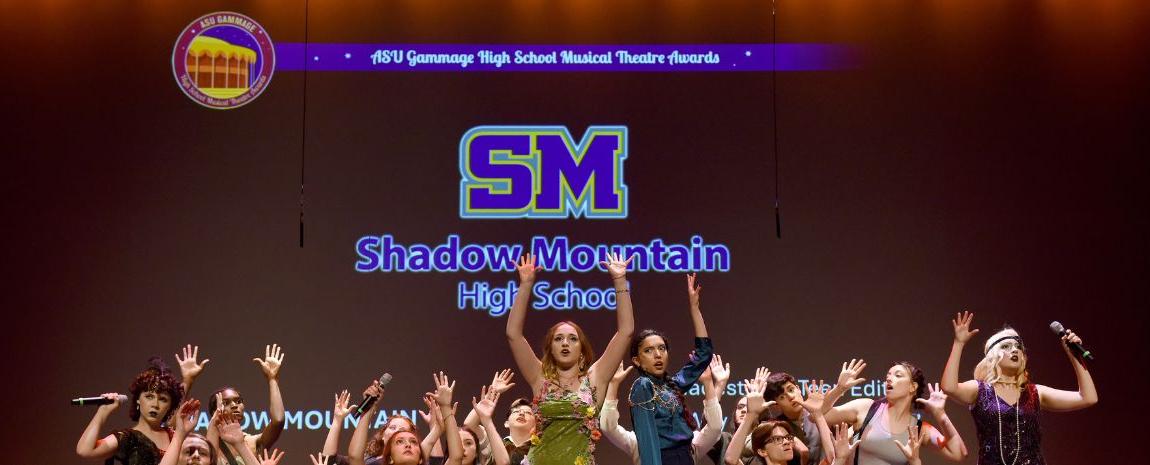
Hundreds of high school students and their loved ones pack into the ASU Gammage auditorium to witness each school perform on stage, invigorated by the fact that they’re standing where Broadway professionals have also stood. In the crowd are the judges, recognized as the aptly named “Greek Chorus”, here not to adjudicate but to watch and cheer and celebrate with the students.
For many of the judges, there’s a sense of pride they feel when watching these kids. When we watch students grow and thrive in their theater programs year after year and see them become better artists and performers, it becomes hard not to get a bit sentimental over their accomplishments.
And if I may become less objective and more personal for a moment, I would say that’s the best part about being a judge: the students. In my 8 years of adjudication, the students have continued to not only impress me but surpass my expectations. The budgets and the time constraints and the limited supplies create an environment where the students come up with the most creative and innovative solutions. Some of my favorite examples are using a whole school campus as a set for Charlie Brown or having a hand-cranked turn table moved by the workers in Hadestown. Seeing the students grow through the years is incredibly heartwarming.
Take for example our very own Casey Likes; one day I was watching him perform his heart out with his peers on his school’s stage, the next he was winning Best Lead Male and headed to New York becoming a Jimmy Awards finalist!
It’s truly amazing to see these students succeed and as a judge I’ve been both humbled and honored to be part of their journey in a small way.
ASU Gammage might present the “Best of Broadway”, but my fellow judges and I know that we get to see the best before they hit Broadway.
Image Gallery