Inside the ASU Gammage Broadway Adventure: Where donors step beyond the stage and into the making of Broadway itself
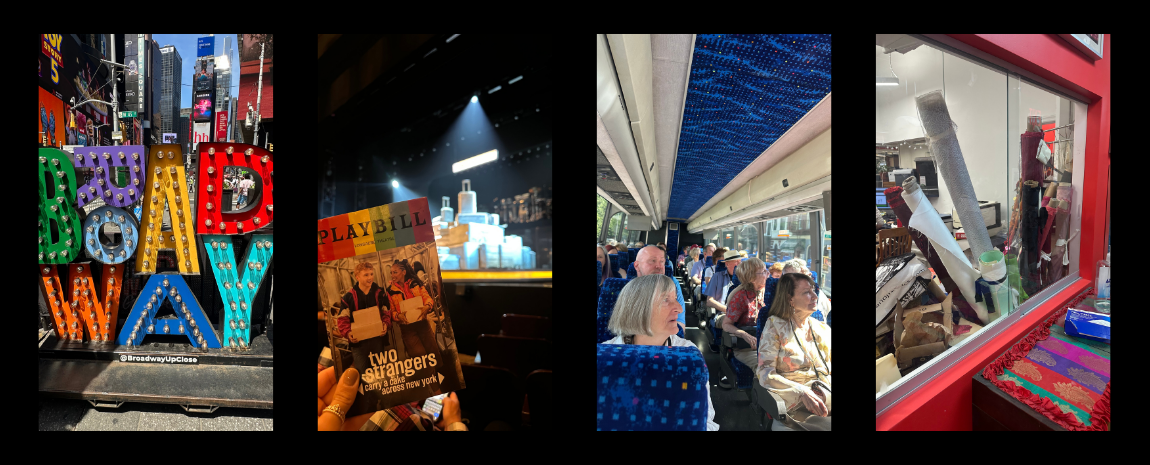
For ASU Gammage donors, the annual Broadway Adventure is more than a trip to New York — it is a rare invitation behind the curtain of Broadway’s creative ecosystem. From engaging conversations with industry professionals and exclusive performances by Broadway stars to tickets for some of the season’s hottest shows and even the opportunity to attend the Tony Awards, the four-day experience offers an up-close look at how productions are built, reimagined, sustained, and ultimately brought to life for audiences across the country.
Throughout this year’s trip, donors had the opportunity to hear from a variety of industry professionals and performers, including Mike Bosner, producer of CATS: THE JELLICLE BALL; Lauren Blackman, ensemble member and Mother understudy in RAGTIME; and Telly Leung, one of the Phantoms in MASQUERADE. These unique experiences are made possible through the relationships cultivated by Colleen Jennings-Roggensack, Vice President for Cultural Affairs at Arizona State University and Executive Director of ASU Gammage.
What emerges year after year is not simply admiration for the productions themselves, but a deeper understanding of how Broadway evolves — and why its future depends on bold storytelling, creative risk-taking, and audience connection.
“I walked into that audience and never in my life have I seen a group of people so eclectic and diverse,” said Bosner.
Watching a contemporary reimagining of CATS became a defining moment for the producer and a reflection of the current state of theater. The experience was not simply about nostalgia for a beloved title, but about witnessing how reinvention can unlock entirely new meaning.
“Whether you love CATS, hate CATS, or don’t know CATS, you’re suddenly inside this world and it just works,” Bosner reflected.
For donors on the Broadway Adventure, this idea is central: theater is no longer a passive experience. It is immersive, fluid, and deeply responsive to audience energy and perspective.
Broadway as a Living, Evolving Art Form
One of the most powerful takeaways from the experience is learning how Broadway productions are continuously reshaped — not only in rehearsal rooms, but in response to space, audience, and medium.
“How do you take a show designed for one space and translate it to another without losing its DNA?” Bosner asked.
That question becomes especially relevant when discussing staging and touring. Designers and producers must constantly balance creative intention with logistical realities, ensuring that the emotional core of a production survives every transformation.
“We were very focused on how to capture the energy without losing what made it special,” Bosner shared.
Through conversations like these, ASU Gammage donors hear directly from the artists and producers responsible for those decisions — learning how Broadway houses differ from touring venues, how productions adapt to new spaces, and why even subtle changes can dramatically shape the audience experience.
Immersion, Access, and Audience Choice
Another recurring theme of the Broadway Adventure is the expanding definition of what it means to “see” a show.
Immersive productions that allow audiences to move through environments rather than remain seated in a traditional theater have challenged conventional storytelling and opened new creative possibilities. One of New York City's hottest tickets this season is MASQUERADE, the world's first immersive musical inspired by Andrew Lloyd Webber’s PHANTOM OF THE OPERA.
“You’re not just watching a show, you’re moving through it,” shared Telly Leung, one of six actors portraying the Phantom.
Yet even within immersive formats, designers are careful to preserve audience choice. While some theatergoers are eager to step directly into the story, others prefer a more traditional experience.
“We wanted to give audiences the choice: be immersed in it or sit back and watch it unfold,” Leung explained.
This balance between participation and observation reflects a broader shift in Broadway storytelling — one that donors witness firsthand during their time in New York.
The Craft Behind the Curtain
Beyond the spectacle, the Broadway Adventure highlights the precision and collaboration required to sustain live performance at scale. From musicians and dressers to stage managers and understudies, every role is essential and often invisible to audiences.
“As musicians, we are responsible for hiring and training our own substitutes,” explained Paul Lossel, pianist for WICKED.
“The real hero of any show is often the dresser, they keep everything running,” added Lauren Blackman, ensemble member and Mother understudy in RAGTIME.
These insights underscore a core truth of Broadway: what appears effortless on stage is the result of hundreds of people solving problems in real time, every single performance.
“You never know how much you actually know until you’re on stage,” Blackman shared, recounting the first time she stepped into a principal role without having performed a full run-through beforehand.
For many donors, stories like these reveals how many talented individuals work behind the scenes to bring the productions they love to life.
The Global Stage: Broadway Meets Television
The experience extends beyond the theater, particularly during Tony Awards season, when productions must once again be reimagined — this time for television audiences.
“Television and theater are two completely different languages,” Bosner explained. “You’re not crafting for the people in the theater; you’re crafting for the cameras.”
Performances are restructured, timing is adjusted down to the second, and creative teams rethink staging entirely.
Blackman further illustrated the complexity of the process while describing preparations for the Tony Awards.
“In the show, Mother has 37 seconds to complete a quick change. Yesterday, that changed, and now she has only 24 seconds to make the same change for the Tonys.”
For donors, these conversations provide a rare glimpse into how Broadway’s reach goes far beyond New York, bringing performances to audiences around the world.
A Shared Future for Broadway
At the heart of the Broadway Adventure is a belief that theater must remain accessible, transportive, and built for audiences everywhere — not just in New York.
“If it can’t play the road, it doesn’t get produced by me on Broadway,” Bosner shared, describing one of the key criteria he considers when supporting a production.
That philosophy closely aligns with ASU Gammage’s mission Connecting Communities™, bringing world-class Broadway experiences to Arizona while ensuring the art form continues to thrive through touring, accessibility, and community engagement.
“We’re not just looking at next season, we’re looking years ahead,” said Jennings-Roggensack.
For donors, the Broadway Adventure becomes far more than a cultural excursion. It is a reminder that Broadway is not static — it is built, rebuilt, and sustained through shared investment, bold creativity, and a belief in the transformative power of live performance.
And perhaps most importantly, it is a reminder that the investments they make play a direct role in bringing the very best of Broadway to Tempe.