Behind the Curtain: Students Explore Careers That Power ASU Gammage
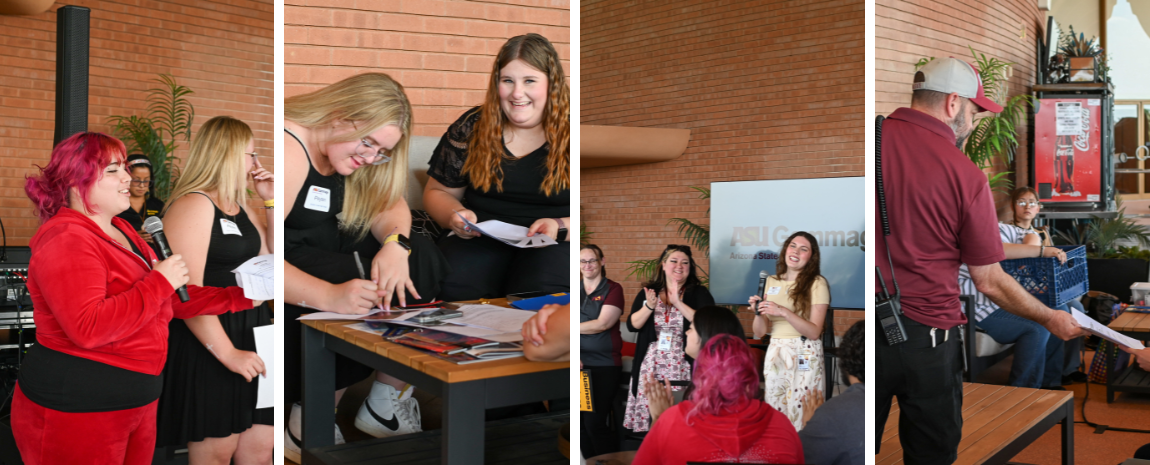
School to Work is always a standout day at ASU Gammage, and this spring’s program once again showed students just how many careers exist behind the curtain. Designed to introduce high school students to the wide range of roles that power a performing arts center, the experience offered an energetic, hands-on look at what it really takes to bring live theater to life.
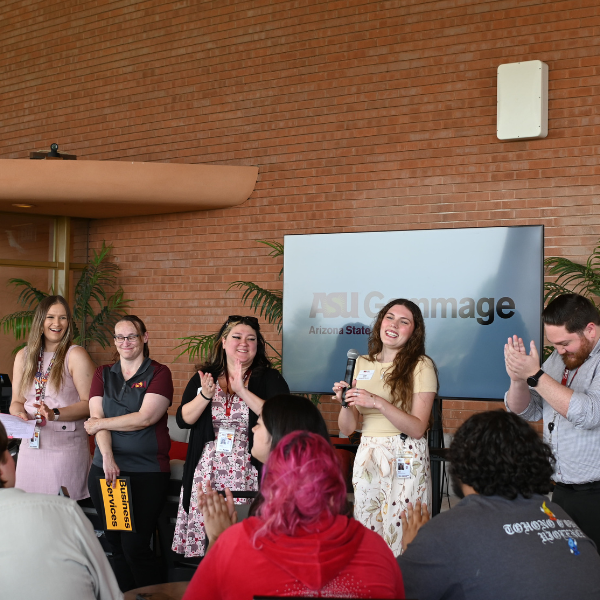
The ASU Gammage promenade was filled with excitement as students from Queen Creek and South Mountain High Schools arrived, taking in the scale of the building, the pace of campus life and the feeling that, for the day, they were stepping into something real. That idea was reinforced immediately during the welcome from Michael Reed, Senior Director of Programming and Initiatives. “You are our staff today,” he told the group, setting the tone and drawing smiles across the room. He encouraged students to ask questions, take risks and imagine themselves in the roles they were about to explore. Looking ahead, he added with a grin, “One day, we want you to take our jobs.”
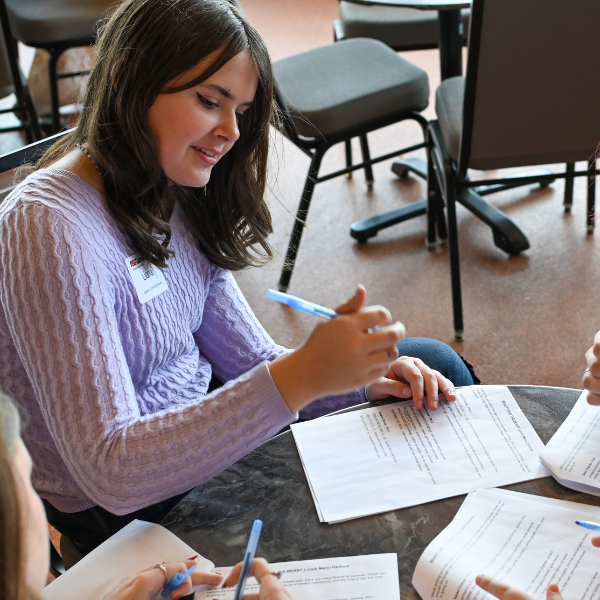
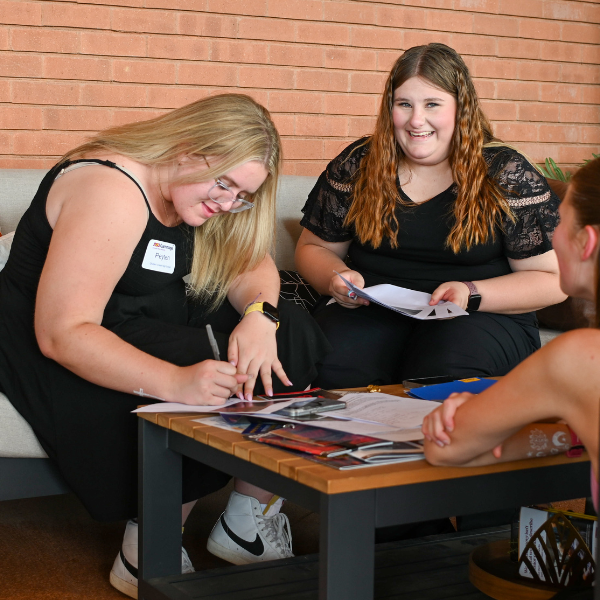
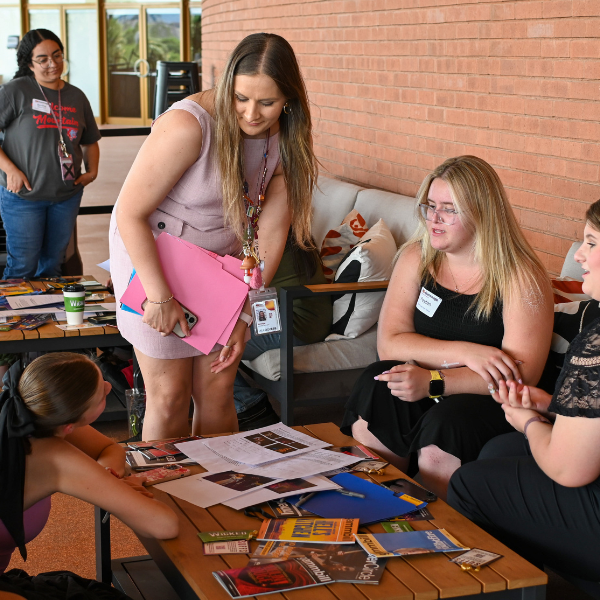
The students were assigned to a department in either marketing, development, operations, business services or audience services. In their groups, they began to see how each department connects to the next. In marketing, students brainstormed social media captions and content ideas, quickly realizing how much planning and creativity goes into every post. Marketing Coordinator Katelyn Aleksa shared that one of her favorite parts of School to Work is showing students “how far in advance we’re working and how much strategy is happening behind the scenes before a show is even announced.”
Development, led by Gabi Herder, Development Specialist, and Megan Loponen, Donor Relations Coordinator, invited students into the world of donor events and philanthropy. The team joked up front that they would skip the tax forms and spreadsheets, then took students on a tour highlighting projects made possible through giving and spaces where donor recognition lives throughout the building. When students were asked to help plan a donor event, they jumped right in. Megan laughed later, saying, “They got really into it, even saying things like, ‘we definitely can’t serve that dessert to donors in the summer.’”
Operations offered a technical walkthrough of the building with Technical Director Shaun Shultz, who explained what his team looks for before doors open each night. When a small issue (just a vent cover that needed repair) appeared during the tour, Shaun turned it into a teachable moment. “This is exactly why we do walkthroughs,” he said. “Everything has to be ready before the audience gets here.” One student summed up the experience perfectly, calling the building “big as heck.”
Audience Services, led by VIP Ticketing & Assistant Office Manager Matt Vernick and ASU Gammage House Manager Kaylee Alger, took their group through the elements of a performance night, from ticketing to managing house staff. Matt shared how many theater careers begin in unexpected places. “You don’t have to be an actor to be part of this world,” he said. “It takes all of us working together to make a show happen.” Students leaned in, asking questions about leadership, guest experience, the artwork and what it’s like to grow within the organization.
Business Services gave students a surprisingly fun crash course in the financial reality of theater. Senior Accounting Specialist Tia Alquist walked them through contracting and final settlements. “School to Work is such a great opportunity for students to see the kinds of jobs that exist in theater beyond acting,” she shared. “They get to understand what it actually takes to put on a show and how all the pieces come together.” A payroll activity led by Jessica Jones, ASU Gammage Payroll and Office Coordinator, that included guessing union rules and penalties quickly became a favorite, proving that finance can be engaging too.
Programming challenged students to think like venue presenters, balancing personal taste with audience expectations. One student reflected that it wasn’t just about choosing shows they liked, but about understanding who the audience is and what would resonate with them.
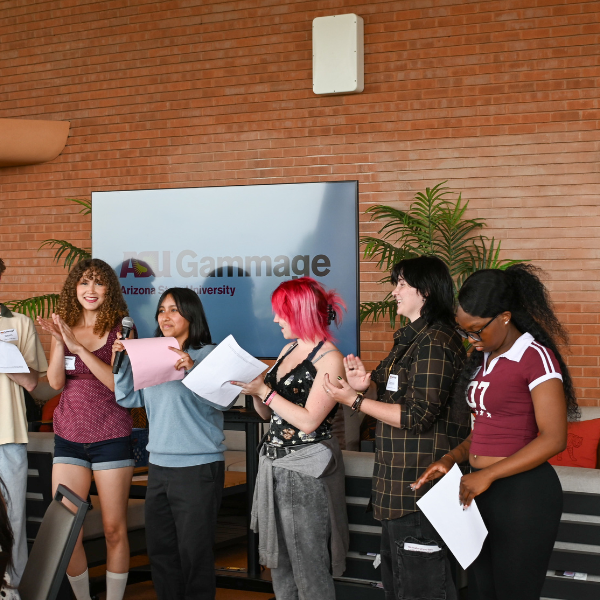
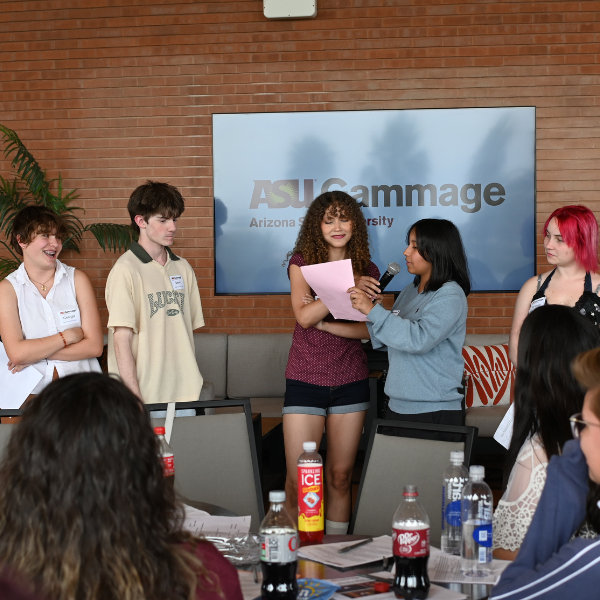
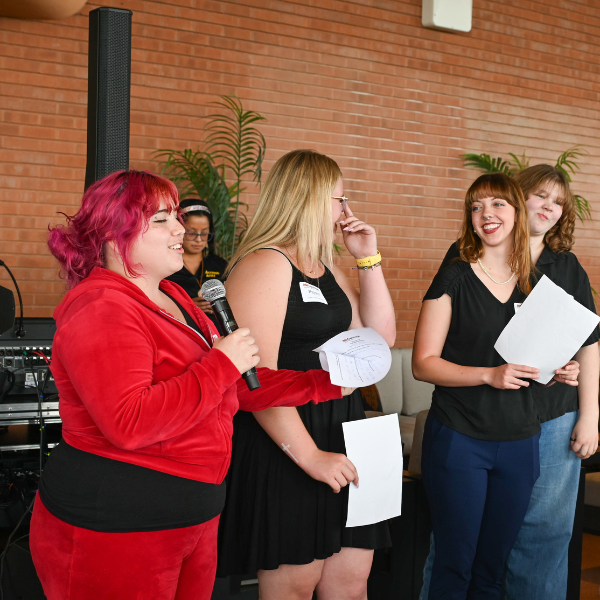
During group reflections, students were quick to share what surprised them most. Marketing earned new respect for being harder than it looks, operations impressed with the sheer scale of the building and many admitted they had never realized how many people it takes to support a single performance.
For Peyton Morrow, a 10th-grade student from Queen Creek High School, the day connected directly to her own interests. “It was really exciting,” Peyton said. “I’m already part of the theater marketing team at my high school, so this gave me more building blocks to make what we do more enjoyable. I didn’t realize how much ASU Gammage posts or how hard it is to keep things fresh when you don’t always have a lot of raw content. I’m really excited to use what I learned, and I could definitely see myself coming back here.”
The day wrapped up with a conversation featuring members of the touring company of HELL’S KITCHEN, including the head carpenter and a swing technician, who shared honest stories about touring life and career paths that began simply by saying yes to opportunities. Their message echoed Michael Reed’s opening remarks: theater is built by people willing to learn, collaborate and step into the work.
That evening, students attended the performance of HELL’S KITCHEN, now seeing it through a completely new lens. As the curtain rose, they could recognize the work of every department they had explored that day, fully appreciating how many moving parts come together to make one unforgettable night at the theater.
Image Gallery